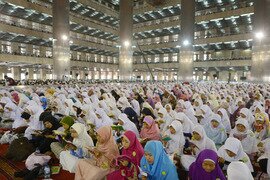
Thai Muslims in the southern border province of Yala celebrated the arrival of Idul Fitri with traditional offerings of zakat (alms) to the poor and preparation of special dishes to be shared among family and friends.
The central retail district in Yala Town was busy in the final days of Ramadan. The Meuangmai Market on the Premjit and shops along the main street were packed with Muslims from surrounding districts in Narathiwat and Pattani.
All came to shop for a variety of items including traditional clothing, shoes and gold jewellery to prepare for Idul Fitri celebrations. The shops in the city centre along the road to the Yala train station were packed with people and the presence of security officers along the narrow street added to the bustle and congestion.
Ramadan, the holy month of fasting which concluded over the weekend, witnessed an upsurge of violence across the Deep South, including car bombings, an arson attack against a Pattani hotel, and slayings of village officials and civilians. Yala officials told Khabar Southeast Asia they are taking no chances.
"We add more checkpoints and step up enforcement of our strict security measures," Yala Immigration Inspector Police Lieutenant Colonel Sungworn Parengen told Khabar.
"This is because all the increased activity might be used by offenders who have carried out attacks in the region and who have fled the country to try to sneak back in to visit relatives," he said.
Betong District Chief Supawaris Phetkarn said his officers were assisting in the security effort.
"We are asking for co-operation from local people to be good guests and to work with our officers to ensure that all visiting tourists enjoy their stays," he said.
Traditions continue despite unrest
The heightened threat of violence, however, has not prevented residents of the Deep South from observing Idul Fitri in the customary way.
In Betong, Thailand's southernmost district, local Muslims and many tourists from bordering Malaysia walked about in their fine new clothes and accessories Sunday (August 19th), making their way to the many local mosques to give zakat before praying to Allah.
Scores of Thai Muslims joined together in prayer at the Ansulna Mosque in Banphahhu subdistrict. After listening to a sermon from the Imam, they congratulated each other on the arrival of the tenth lunar month and expressed repentance for past misdeeds. They then visited the local cemetery to pray at the graves of deceased family members.
When activities at the mosque concluded, families went home to celebrate by preparing special meals for everyone, including visitors who stop by their homes to enjoy the warm atmosphere.
Signature Idul Fitri sweets vary by locale, but in Betong the most well-known is kralan, as it is called in Malay; it is also known as khao laam in Thai. A special local recipe is the pride of Muslims from the area.
Nicknamed "bazooka kralan" by teenagers because it is prepared in sections of bamboo that resemble missile launchers, kralan is made of sticky rice, red beans, sugar, grated coconut and coconut milk. The traditional Betong version is different from other parts of Yala and Pattani, where it is prepared by cooking in kapor leaf.
Betong is also a popular destination among Malaysian tourists who enjoy a long government holiday marking the start of the tenth lunar month.
Tourists are attracted by its beautiful scenery, great restaurants and wide variety of entertainment options. All 3,000 hotel rooms in the town were fully booked for the holiday, which is expected to pump tens of millions of baht into the local economy.
Add A Comment (Comments Policy)* denotes required field